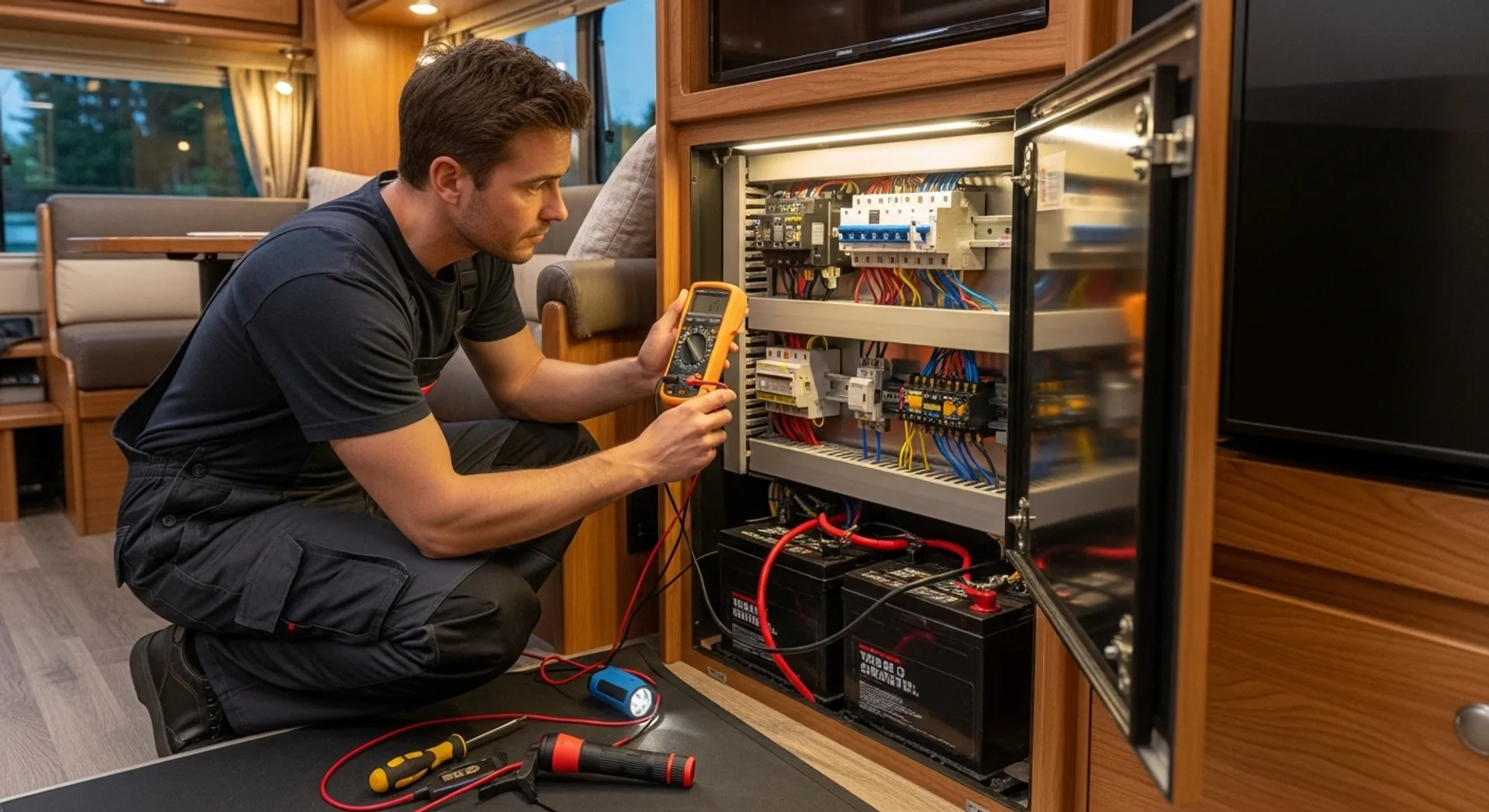
RV electrical problems are one of the most common challenges RV owners face, regardless of whether they travel in a campervan, Class C motorhome, or Class A coach. From flickering lights to complete power loss, electrical issues can quickly disrupt a trip and lead to costly repairs if ignored.
Understanding how RV electrical systems work and learning how to recognize early warning signs can help you diagnose problems safely and make informed decisions about maintenance and repairs.
How RV Electrical Systems Work

Most recreational vehicles use two separate electrical systems that work together. Knowing the difference between them is essential when diagnosing RV electrical problems. For a comprehensive overview of different RV types and their electrical requirements, explore our RV vehicles guide.
12 Volt DC Electrical System
The 12-volt DC system powers essential components such as interior lights, water pumps, control panels, fans, slide-outs, and some ignition systems. This power comes primarily from the RV battery bank and is recharged by the converter, alternator, or solar panels if equipped. Understanding this system is crucial for maintaining your RV properly and preventing common electrical failures.
120 Volt AC Electrical System
The 120-volt AC system operates household-style appliances including air conditioners, microwaves, televisions, and wall outlets. Power is supplied through shore power connections or onboard generators. Problems in either system can cause symptoms that appear similar, which is why accurate diagnosis matters.
Most Common RV Electrical Problems
Dead or Draining Batteries
Battery-related issues are the most frequent cause of RV electrical problems. Batteries may drain due to parasitic loads, aging cells, corroded terminals, or improper charging. Symptoms include dim lights, non-responsive control panels, or appliances shutting down unexpectedly. For detailed guidance on battery maintenance, check out our article on preventive care strategies.
Loose or Corroded Connections
Vibration during travel can loosen electrical connections over time. Corrosion at battery terminals or grounding points can also restrict current flow and create intermittent electrical failures.
Blown Fuses and Tripped Breakers
Blown fuses and tripped breakers usually indicate overloaded circuits or faulty appliances. Repeated failures often signal deeper issues that should not be ignored.
Faulty Power Converter
The power converter plays a crucial role by converting 120-volt AC power into 12-volt DC power. When converters fail, batteries may stop charging, leading to widespread electrical issues even when plugged into shore power.
Shore Power Connection Issues
Damaged power cords, worn outlets, or improper adapters can prevent consistent power delivery. Burn marks or heat around connectors are strong warning signs.
Early Warning Signs of Electrical Trouble

Electrical problems often provide subtle warning signs before complete failure occurs.
Flickering or Dimming Lights
Inconsistent lighting often points to battery issues, grounding problems, or failing converters.
Appliances Not Running Properly
Appliances that shut off unexpectedly or fail to start may indicate voltage irregularities.
Unusual Smells or Heat
Burning odors or warm outlets can indicate dangerous electrical faults and should be addressed immediately.
Error Codes or Warning Lights
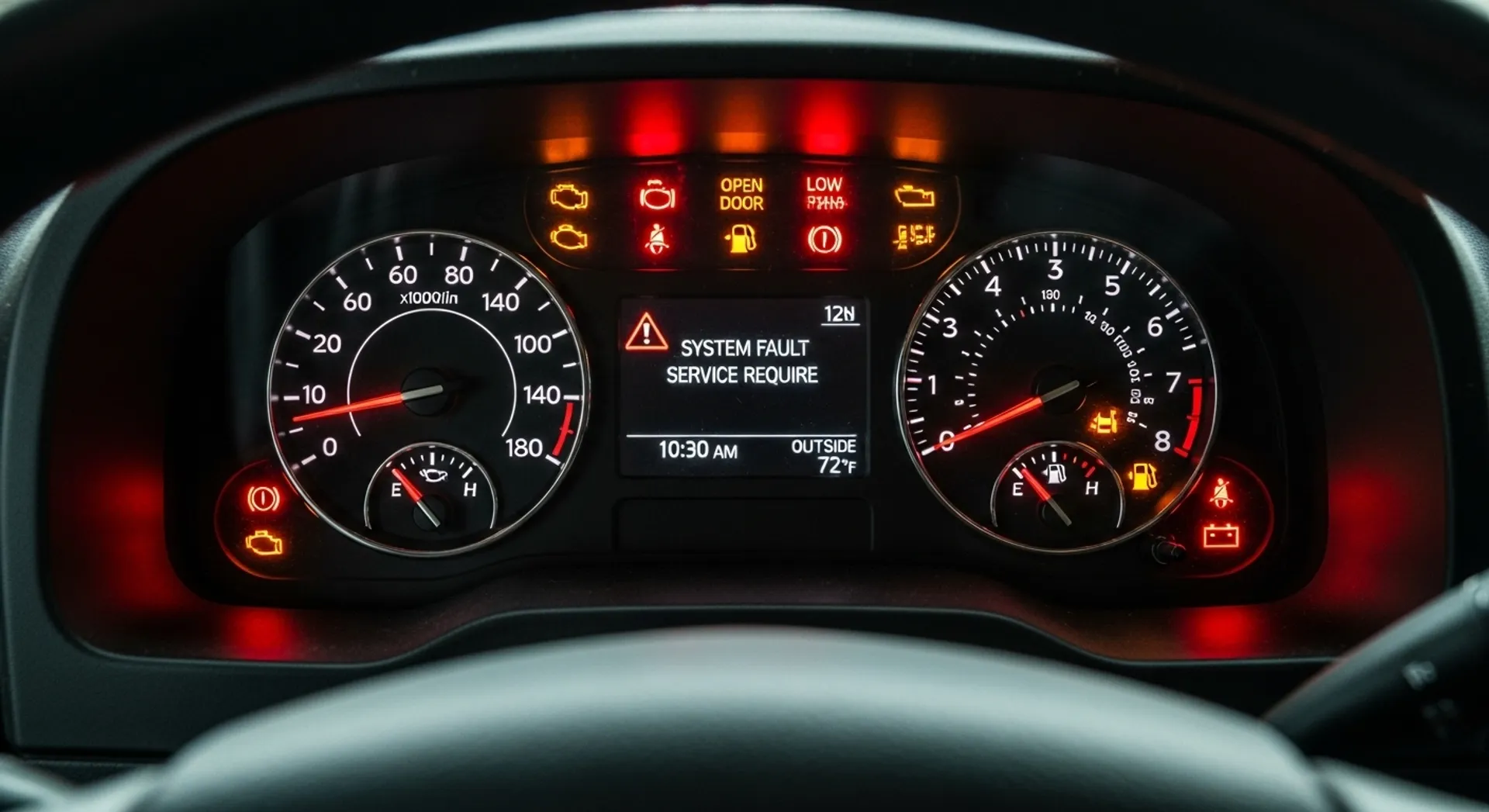
Modern RVs may display error codes on control panels or dashboards when electrical systems detect faults.
Basic RV Electrical Diagnosis Steps
While complex electrical repairs should be handled by professionals, basic diagnosis can help you understand what may be wrong.
Check Battery Voltage
Using a multimeter, healthy RV batteries should read approximately 12.6 volts when fully charged. Lower readings may indicate charging or battery health issues.
Inspect Connections and Grounds
Look for loose cables, corrosion, or damaged insulation. Clean terminals and tighten connections as needed.
Test Shore Power and Breaker Panels
Ensure breakers are reset and verify that shore power outlets are supplying proper voltage.
Evaluate the Power Converter
A failing converter may produce insufficient charging voltage. Unusual noises or overheating are common warning signs.
When Electrical Problems Become Safety Risks
Some RV electrical problems go beyond inconvenience and become safety hazards.
Fire Risks
Overheated wires, overloaded circuits, and damaged connectors increase the risk of electrical fires.
Carbon Monoxide and System Failures
Electrical issues affecting generators or monitoring systems may prevent safety alerts from functioning properly.
According to the National Highway Traffic Safety Administration, electrical system failures are a contributing factor in many vehicle-related safety incidents. Additionally, the FCC provides guidance on electrical safety in recreational vehicles.
Preventing Common RV Electrical Problems
Routine Inspections
Inspect electrical components before and after trips to catch issues early.
Battery Maintenance
Keep batteries clean, properly charged, and replaced according to manufacturer guidelines.
Use Surge Protection
Surge protectors help prevent damage from unstable campground power supplies.
Follow Load Limits
Avoid running too many high-draw appliances simultaneously.
Know When to Seek Professional Help
If electrical problems persist after basic troubleshooting, professional diagnosis is recommended. Complex wiring, inverter issues, or repeated breaker failures require specialized tools and experience.
For additional troubleshooting resources and maintenance guides, browse our RV Library or return to the Heartland RV Repair homepage for more RV ownership insights. You can also explore our troubleshooting and diagnostics section for step-by-step guides on diagnosing and resolving electrical issues.