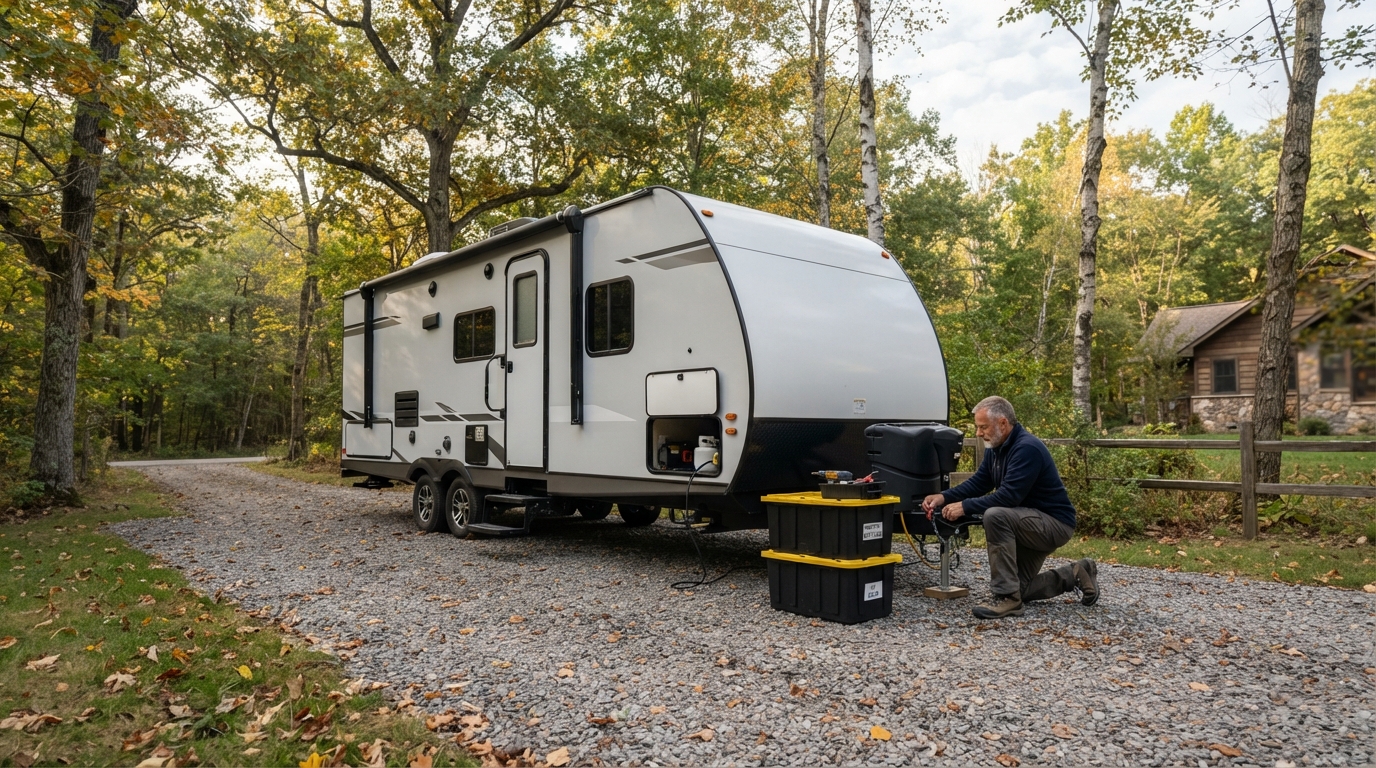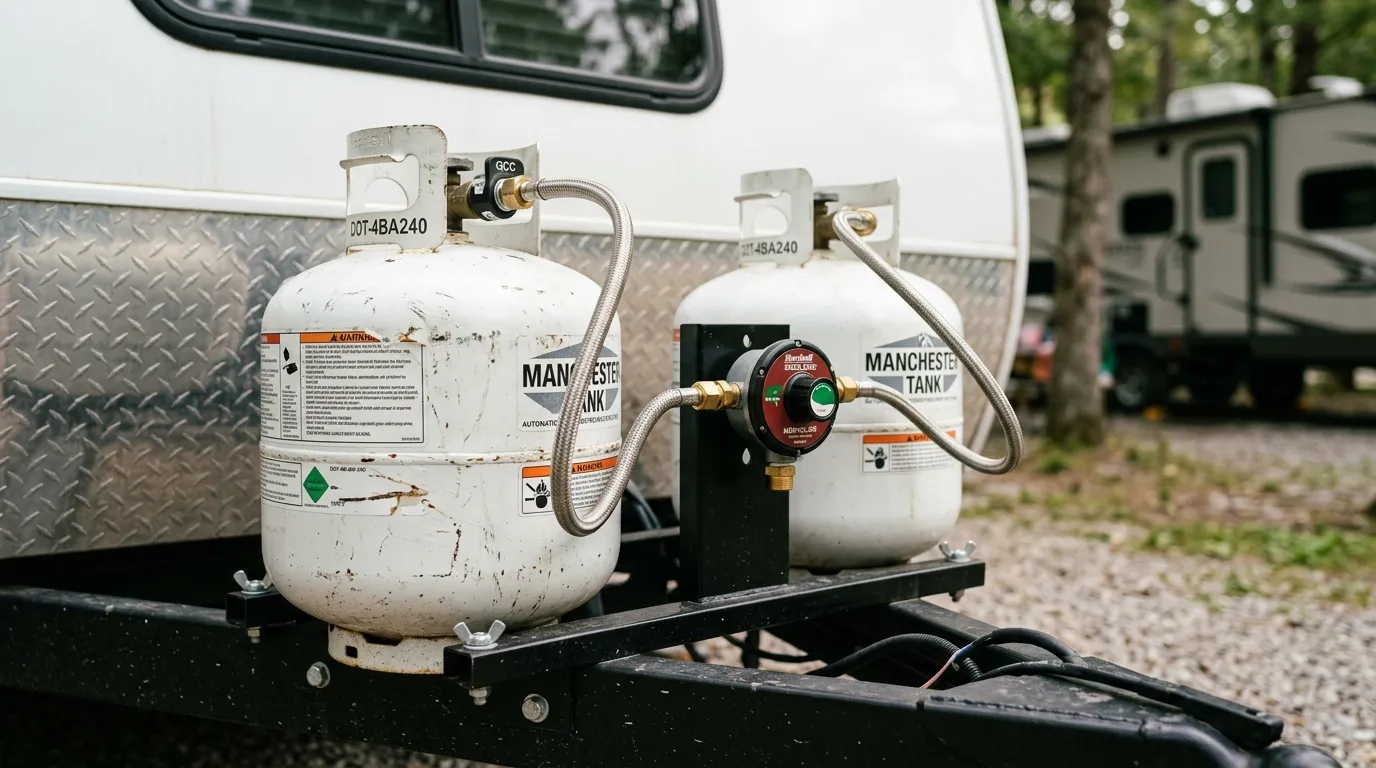
Walk through any RV park or boondocking site in 2026, and you’ll see the same conversation happening: Should I switch to lithium? What used to be a niche upgrade for full-time off-gridders has become one of the most popular modifications in the RV community. Lithium battery prices have dropped, more rigs come lithium-ready from the factory, and the appeal of doubling your usable power without doubling your weight has finally hit the mainstream.
But an RV lithium battery conversion isn’t just a drop-in swap, and the upfront cost still gives plenty of owners pause. This guide breaks down what’s actually involved, what you can expect to spend, and whether the upgrade makes sense for the way you actually use your RV.
What Is an RV Lithium Battery Conversion?
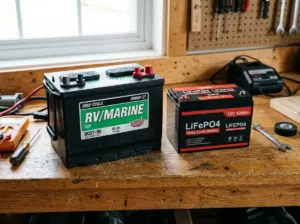
An RV lithium battery conversion replaces your existing lead-acid or AGM batteries with lithium iron phosphate (LiFePO4) units. The chemistry is fundamentally different from the batteries that came with your rig, and that difference is the source of every advantage and every complication that comes with the upgrade.
Why LiFePO4 and Not Other Lithium Types
You’ll see the term “lithium” used loosely in marketing, but for RV use, there’s really only one chemistry worth considering: lithium iron phosphate, abbreviated LiFePO4. It runs cooler than other lithium chemistries, has a much higher thermal runaway threshold, and uses a more stable cathode material. The lithium-ion batteries you find in laptops and electric vehicles use different chemistries that aren’t suited to the deep-cycle, vibration-heavy environment of an RV.
Battery-Only Swap vs. Full System Upgrade
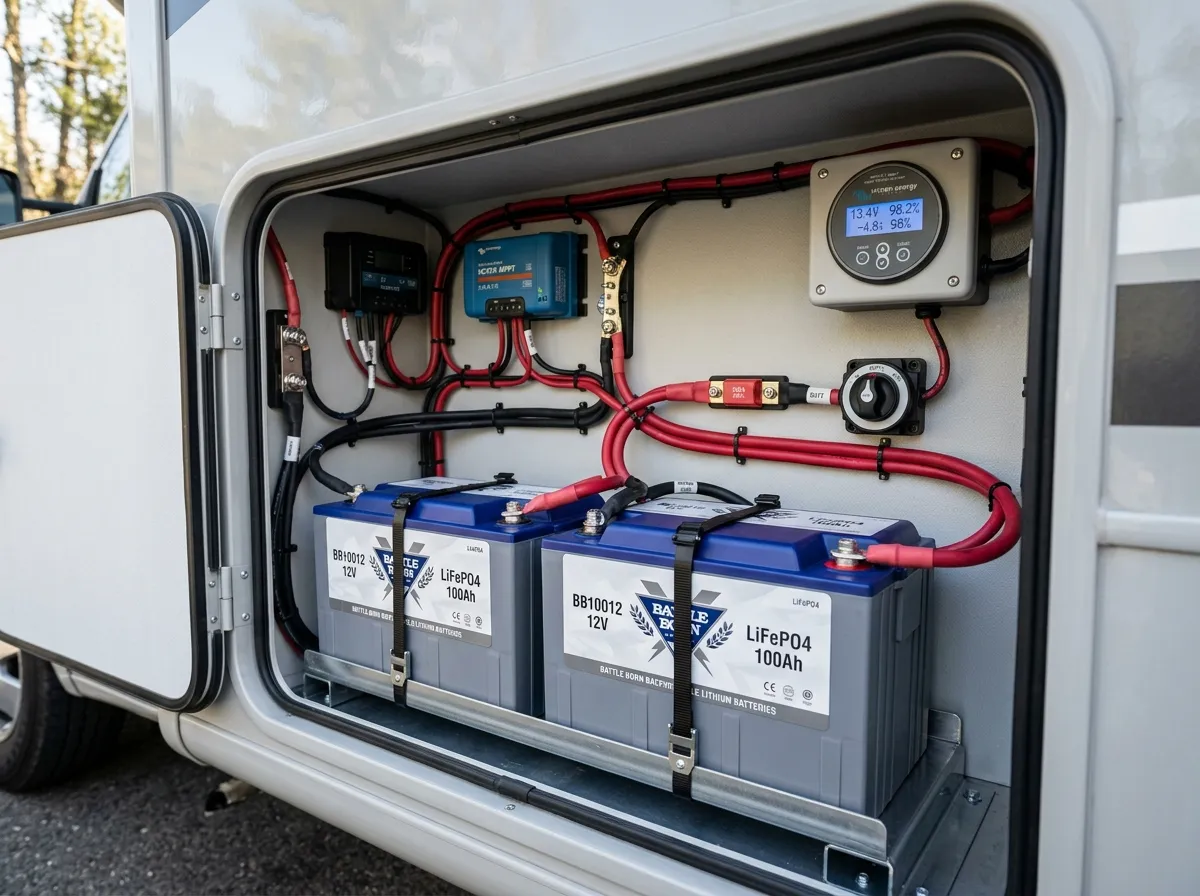
There are two paths most owners choose between. A battery-only swap replaces just the batteries while keeping your existing converter, inverter, and charging components. This is the cheaper, faster option and works fine for some rigs. A full system upgrade replaces or upgrades the converter or charger, the inverter, the solar charge controller, and sometimes the wiring itself. The full system upgrade is where you actually unlock lithium’s performance advantages, but it’s also where the cost climbs.
The Real Benefits of Switching to Lithium
Lithium isn’t just better on paper. The differences show up in ways you notice every single trip.
Usable Capacity and Depth of Discharge
This is the single biggest reason owners make the switch. A 100Ah lead-acid battery only gives you about 50Ah of usable power because draining it past 50 percent dramatically shortens its lifespan. A 100Ah LiFePO4 battery gives you nearly the full 100Ah, every cycle, without damage. In practical terms, that means a single lithium battery often replaces two lead-acid batteries while delivering more real-world power.
Weight Savings
LiFePO4 batteries weigh roughly half what equivalent lead-acid batteries do. A typical lead-acid bank for off-grid use might weigh 200 to 400 pounds, while the lithium equivalent often comes in at 70 to 150 pounds. That weight reduction matters for tow vehicle payload limits and for fuel economy on long trips.
Lifespan and Long-Term Cost
Lead-acid batteries are typically rated for around 500 cycles. Quality LiFePO4 batteries are rated for 3,000 to 5,000 cycles, which translates to roughly 10 to 12 years of consistent use under normal RV conditions. Even though lithium costs more upfront, the cost per cycle is significantly lower, and you’re not replacing batteries every few years.
Charging Speed and Efficiency
Lithium batteries accept charge much faster than lead-acid. They also charge at nearly 99 percent efficiency, compared to roughly 85 percent for lead-acid. Pair a lithium bank with solar and you’ll bank significantly more usable power from the same panels on the same sunny day.
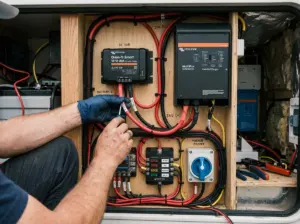
What an RV Lithium Conversion Actually Costs in 2026
Pricing has come down considerably over the last few years, but a quality lithium build still represents a meaningful investment. Here’s what to expect at each tier.
Entry-Level Battery Swap
If you’re simply replacing one or two lead-acid batteries with drop-in lithium units and keeping everything else stock, you’re looking at roughly $400 to $800 per 100Ah battery, depending on brand and features like Bluetooth monitoring or low-temperature cutoff. A two-battery weekender setup can come in around $1,000 to $1,500 total. This works best for owners who mostly stay at campgrounds with hookups and just want longer-lasting batteries.
Mid-Tier Boondocking Build
This is where most serious off-grid users land. A 200Ah to 400Ah lithium bank, a lithium-compatible converter or charger, a 2,000-watt inverter, and a battery monitor will typically run between $2,500 and $5,000 in parts. Add another $800 to $2,000 if you have it professionally installed. You’ll be able to run a residential fridge, charge laptops all day, and skip generator runs for several days at a time.
Full Off-Grid Conversion
Full-time travelers and serious boondockers often go bigger: 600Ah or more of lithium, a 3,000- to 5,000-watt inverter, a high-output solar array, and integrated monitoring. These builds run $7,000 to $15,000 or more depending on solar capacity and labor. They’re the closest thing to residential power you can get on wheels.
Hidden Compatibility Issues to Check First
Most of the disappointment owners experience after a lithium upgrade traces back to compatibility issues that weren’t caught before installation. Check these items before you spend a dollar.
Your Converter or Charger Profile
Many older RV converters use lead-acid charging profiles that won’t fully charge a lithium bank. Lithium needs an absorption voltage of roughly 14.2 to 14.6 volts and a different charging algorithm. If your converter doesn’t support lithium, you’ll either need to replace it or accept that your batteries will only charge to around 80 percent capacity.
Solar Charge Controller
Most modern MPPT controllers have a lithium setting, but older PWM controllers often don’t. Check your manual or contact the manufacturer before you assume your solar setup will work.
Alternator Charging
If you charge from the tow vehicle or chassis alternator, you may need a DC-to-DC charger to prevent the alternator from overheating. LiFePO4 has very low internal resistance, which lets it accept charge so aggressively that it can actually damage an alternator that’s not protected by a current-limiting charger.
Cold Weather Performance
LiFePO4 batteries cannot be charged below freezing without damage, though they can still discharge in the cold. If you camp in winter, look for batteries with built-in low-temperature cutoff and self-heating functions. The Battery Council International publishes useful resources on cold-weather battery performance and storage practices.
Image 3 here
Is the Conversion Worth It for You?
The honest answer depends entirely on how you use your rig. If you almost always stay at campgrounds with full hookups and rarely run anything off battery for more than an hour, the upgrade is hard to justify financially. Your existing lead-acid setup probably does what you need.
If you boondock regularly, take long travel days where the fridge runs off battery, work remotely from your rig, or want to skip generator dependence, the conversion pays for itself within a few seasons in convenience alone — and likely in actual battery replacement costs over a decade. Owners who pair lithium with even a modest solar array consistently report it’s the single best upgrade they’ve made to their RV. Resources like RV LIFE have published detailed owner case studies that back this up across rig types and use patterns.
Final Thoughts on Going Lithium
An RV lithium battery conversion is one of the few upgrades that genuinely transforms how you use your rig. It’s also one of the easiest places to overspend if you don’t match the build to your actual camping style. Start by tracking your real power consumption for a few trips, identify whether you’re chasing capacity, charge speed, weight savings, or all three, and price out both the battery-only and full-system paths before committing.
Whatever direction you choose, the principles for safe electrical work still apply. Before you start any conversion, review the same fundamentals covered in our guide to common RV repairs, and use a thorough pre-trip inspection to verify everything is connected and protected before your first trip on the new system. A lithium build done right will outlast multiple sets of tires and probably the rig itself.