Your RV’s propane system is one of the hardest-working components on board. It fuels your furnace on cold nights, heats your water, runs the fridge when you’re boondocking, and keeps your stove ready for morning coffee. Yet for all the work it does, propane gets far less attention than roofs, tires, or electrical systems — until something goes wrong. And when propane goes wrong, the consequences can range from a ruined trip to a life-threatening emergency.
This guide walks you through the essentials of RV propane system safety: how to inspect the system, detect leaks safely, test your regulator, and maintain the small but critical components that keep your rig fire-safe on the road. Most of these checks take less than an hour and require tools you likely already own.
How Your RV Propane System Works
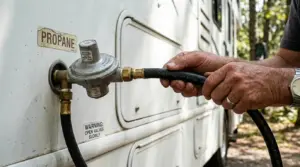
Before you can inspect a system safely, you need to understand its basic layout. Every RV propane setup shares the same core components, whether you own a compact campervan or a 35-foot Class A motorhome.
Tanks and Cylinders
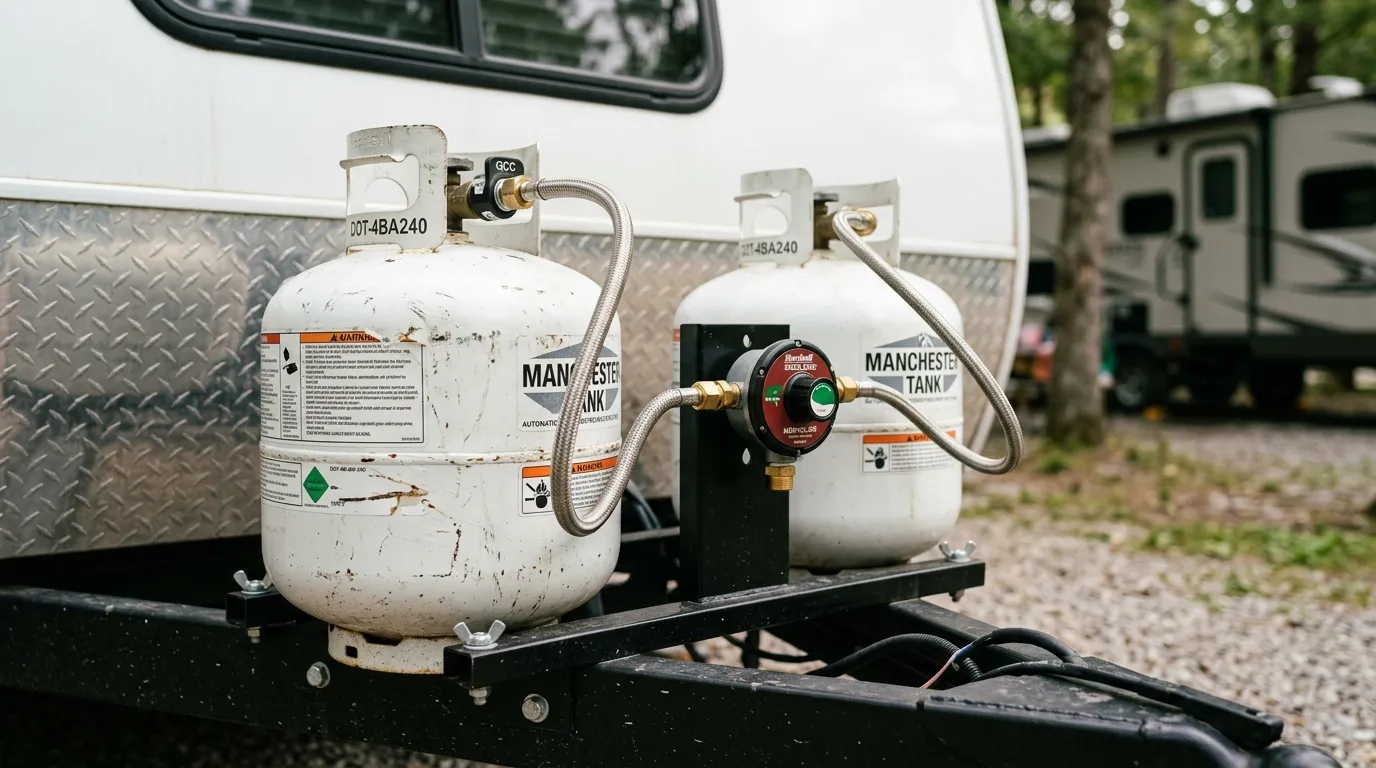
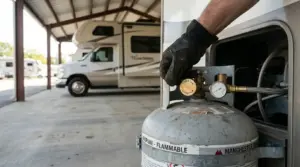
Travel trailers and fifth wheels typically use removable DOT cylinders (the familiar 20-, 30-, or 40-pound tanks), while motorhomes use a fixed ASME tank mounted to the chassis. Both store propane as a liquid under pressure. The liquid vaporizes into gas as it travels through the regulator toward your appliances.
The Two-Stage Regulator
The regulator is the single most important safety component in the system. It steps tank pressure (which can exceed 100 psi on a hot day) down to the 11 inches of water column that your appliances are designed to use. Modern RVs use a two-stage regulator with an automatic changeover feature, which switches from an empty tank to a full one without interrupting service.
Lines, Hoses, and Appliance Connections
Copper and steel lines carry low-pressure gas from the regulator to each appliance. Flexible rubber “pigtail” hoses connect DOT cylinders to the regulator and are one of the most common failure points in the entire system due to UV exposure, vibration, and age.
Seasonal Propane Inspection: What to Check and When
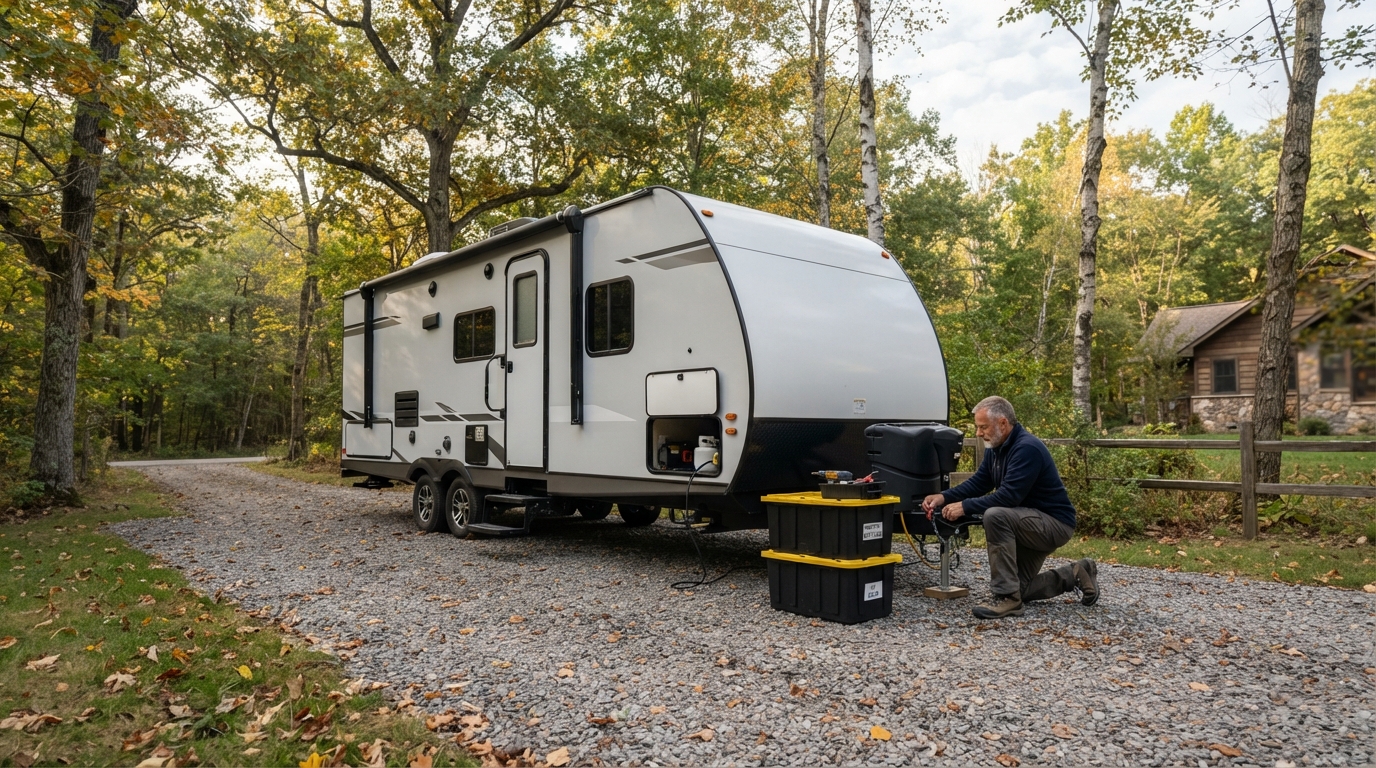
Even a well-built propane system needs regular attention. Road vibration loosens fittings, temperature cycling stiffens seals, and rodents occasionally chew through rubber hoses during storage. A seasonal inspection catches these issues before they become emergencies.
Visual Walk-Around
Start with a slow visual inspection of every accessible component. Look for cracked or weathered pigtail hoses, corrosion on brass fittings, rust on the regulator body, and any oily residue around connections (which can indicate a slow leak that has trapped dust). Check that the regulator vent is pointed downward at the 6 o’clock position so water cannot enter the diaphragm. If the vent is blocked or pointed up, the regulator cannot function properly and must be repositioned or replaced.
Hose and Regulator Age
Propane hoses generally need replacement every 5 to 10 years, and regulators every 10 to 15 years — or sooner if you see any signs of damage or performance issues. Many owners wait until something fails, but preventive replacement is inexpensive insurance. A new two-stage regulator costs roughly $40 to $70 and takes about 20 minutes to swap out.
Appliance Flame Check
Light each propane appliance and watch the flame. A healthy propane flame burns crisp blue with a small yellow tip. Yellow, sooty, or sputtering flames indicate incomplete combustion, which can mean a dirty burner, an aging regulator, or improper gas pressure. Any of these conditions can release carbon monoxide into the cabin. If you see yellow flames, shut the appliance down and diagnose the cause before further use.
Detecting Propane Leaks Safely
Propane is naturally odorless, so manufacturers add ethyl mercaptan, which produces a distinct rotten-egg or skunk-like smell. If you ever catch that odor inside or around your rig, treat it as an emergency.
Immediate Response to a Suspected Leak
Do not operate any switches, lights, phones, or appliances — a single spark can ignite accumulated vapor. Evacuate everyone from the RV, shut off the propane supply at the tank, and ventilate the cabin by opening windows and doors from outside. Only after the area has fully aired out should you investigate the source. The Propane Education & Research Council provides official emergency response guidance that every RV owner should review.
The Soapy Water Test
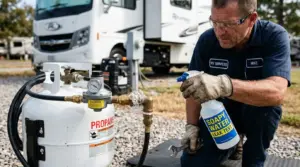
For locating small leaks, the soapy water test remains the most reliable DIY method. Mix one part unscented dish soap with one part water in a spray bottle. With the tank valve open and appliances turned off, spray the solution generously on every visible connection — pigtail fittings, regulator inlets and outlets, brass elbows, and appliance shut-off valves. Bubbles indicate a leak. Avoid soaps containing chlorine or ammonia, as these will corrode brass and copper fittings over time.
Your Onboard LP Gas Detector
Every modern RV has an LP gas detector mounted low on a wall or near the floor, because propane is heavier than air and settles at floor level. These detectors have a finite lifespan — typically 5 to 7 years — and must be replaced when expired, even if they still appear to function. Check the back of your detector for a manufacture or expiration date. If you cannot find one, or if the unit is older than seven years, replace it. A new LP detector costs around $50 and is one of the cheapest safety upgrades you can make.
Regulator Testing and Pressure Checks
A failing regulator is one of the most common propane problems on older RVs, and the symptoms are often mistaken for appliance issues. If your furnace runs weakly, your stove produces yellow flames, or your water heater struggles to light, the regulator is a prime suspect.
Signs of a Failing Regulator
Watch for appliances that won’t stay lit, humming or hissing noises from the regulator itself, soot accumulation around burners, and frost on the regulator body during normal operation. Any of these point to internal wear in the diaphragm or spring mechanism. Regulators are sealed units and cannot be rebuilt — when one fails, it must be replaced.
The Time Pressure Drop Test
The gold-standard test for overall system integrity is the time pressure drop test, which technicians use to certify RV propane systems. It requires a U-tube or digital manometer and confirms that the entire system — from tank to appliances — holds pressure without losing any gas. The system is pressurized to 11 inches of water column, allowed to stabilize at 8 inches, and monitored for three minutes. Any drop indicates a leak somewhere in the lines, fittings, or appliance valves. If you’re not comfortable performing this test yourself, any certified RV technician can do it for around $75 to $150, and you should have it done annually regardless.
Propane Safety on the Road and in Storage
Propane safety doesn’t end with a passing leak test. How you travel, store, and refill the system all affect long-term safety.
Traveling With Propane On or Off
This is one of the most debated topics in the RV community. Running your fridge on propane while driving keeps food cold during long travel days, but it also means an open flame in a moving vehicle. Most safety experts, including technicians at the National RV Training Academy, recommend turning propane off before driving, especially when fueling or entering tunnels. Many state laws and ferry services actually require this. Modern RV refrigerators hold their temperature for eight hours or more when closed, so the convenience rarely justifies the risk.
Storage Best Practices
Before storing your RV for the off-season, close the tank valve fully and disconnect the pigtail hoses if possible. This prevents any slow leaks from draining your tanks and eliminates the risk of a gas buildup during months of inactivity. Check for rodent activity around propane compartments when you pull the rig out of storage — mice love to chew rubber hoses and can create dangerous leaks that don’t become obvious until you refill and pressurize the system.
Safe Refilling Procedures
Never refill a propane tank with appliances running or pilot lights lit. Turn off all propane-powered equipment before the attendant connects the fill hose, and confirm they use the 80-percent bleeder valve to avoid overfilling. Overfilled tanks can vent propane through the relief valve on hot days, creating an ignition hazard.
Final Thoughts on RV Propane Safety
Propane gets a reputation for being dangerous, but statistically, a properly maintained RV propane system is one of the safest fuel setups in the vehicle world. The key word is maintained. A quick seasonal inspection, a soapy water test twice a year, and replacement of aging hoses and detectors on schedule will keep your system performing safely for decades.
If you’re already performing seasonal maintenance on your roof, water system, and batteries, adding a propane check to that routine takes almost no extra time. Pair it with your pre-trip inspection checklist and your annual review of recent RV safety recalls, and you’ll catch the vast majority of issues before they become problems on the road.
Every system on your RV deserves respect, but propane deserves a little extra. Treat the inspection seriously, trust your nose and your detector, and don’t hesitate to bring in a certified technician when something doesn’t look right.